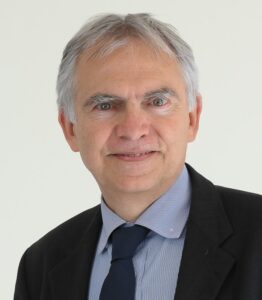
Demetrios Anglos is a Professor at the Department of Chemistry, University of Crete (UoC) and Associated Researcher at the Institute of Electronic Structure and Laser, Foundation for Research and Technology-Hellas (IESL-FORTH), where he leads the Applied Spectroscopy Laboratory (since 2001). He holds a B.Sc. in Chemistry (1986) from the University of Athens, Greece and a Ph.D. in Physical Chemistry (1994) from Cornell University, U.S.A. The activities of his research group focus on a) the study of photophysics in molecules and novel nanomaterials with potential sensing applications, and b) the applications of laser spectroscopic techniques (LIF, LIBS, Raman spectroscopy) in the analysis of materials, with particular emphasis on the development of mobile, field-deployable instrumentation for the study of archaeological objects and works of art, supporting analytical campaigns in museums and archaeological sites.
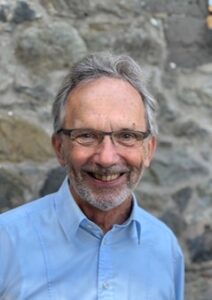
Prof. Dr. Reinhard Noll studied physics at the Technical University of Darmstadt, where he completed his doctorate in 1984. He co-founded the Fraunhofer Institute for Laser Technology (ILT) in Aachen in 1985. There he headed the department of laser measurement technology and was later head of the division for measurement technology and EUV radiation sources as well as member of the institute’s management. He is a co-founder of ILT spin-off companies.
In 2012, he habilitated at RWTH Aachen University in the field of LIBS and received the venia legendi for “Laser Metrology for Inline Process Diagnostics.” Since 2022, he has been head of the R&D department at Laser Analytical Systems & Automation GmbH in Aachen. With 196 scientific publications, 5 books, and 40 patents, he has made a significant contribution to the development of laser measurement methods and their industrial application.
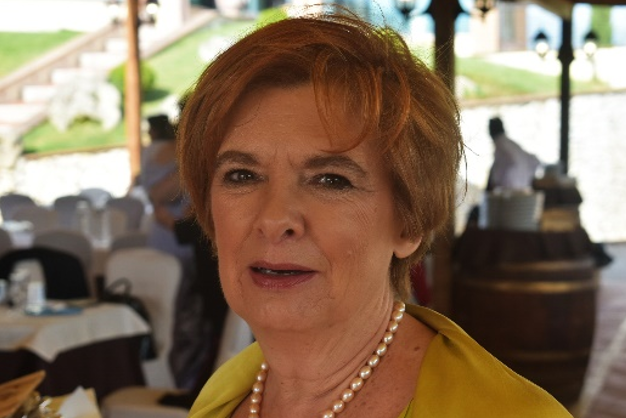
Dr. Roberta Fantoni
She holds a degree in Chemistry from Rome University La Sapienza. She spent all her career at ENEA, research center Frascati, where she covered the roles of head of the Laboratory Laser Applications, head of the Technical Unit Applications of Radiations, head of the Division Physical Technologies for Security and Heath Division. She retired July 1, 2022. She has been involved in multidisciplinary research activities focused on laser-matter interaction and projects implying knowledge relevant to both chemistry and physics such as laser spectroscopy: LIF, LIBS, Raman, material processing and nanotechnology, industrial and environmental laser diagnostics, including local and remote characterization of Cultural Heritage. ENEA member in E-RIHS.it and in the Centre of Excellence of the District of Technologies for Culture of Latium Region until December 2022, leading projects addressed to technology transfer from research institutes to conservators and restores. Author of 188 papers on international journals and 31 book chapters.
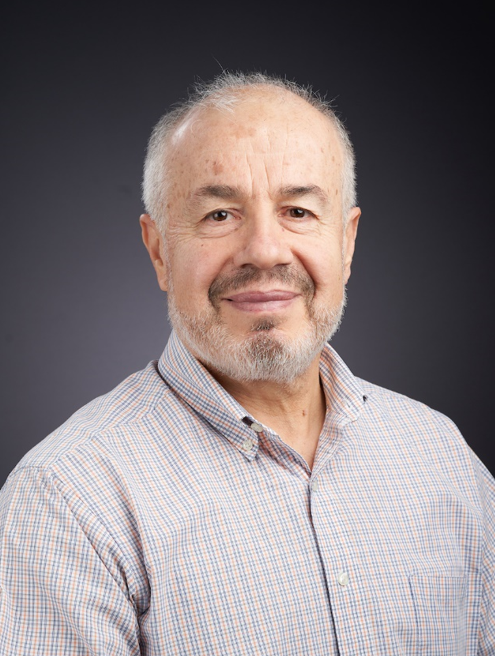 Mohamad Sabsabi earned his Ph.D. in Physics from the Université de Paris XI in 1988. Following his postdoctoral research on thermal plasmas, he joined the National Research Council of Canada (NRC) in 1992, where he pioneered activities in laser plasma spectroscopy and laser-induced breakdown spectroscopy (LIBS) in Canada. Dr. Sabsabi holds 25 patents and has a record of more than 600 publications (articles and conferences) covering both the fundamental science and industrial applications of laser-induced plasmas. Working with his team, he successfully implemented LIBS technology for a wide range of applications. His innovations have led to the creation of three spin-off companies and enabled ten technology transfers, applying LIBS in industries including mining, agriculture, metallurgy, pharmaceuticals, and manufacturing. He initiated and led the High Efficiency Mining (HEM) program for five years, aiming to enhance the mining value chain through the development of advanced sensors, process technologies, and new materials. Dr. Sabsabi has served on the editorial advisory boards and as guest editor for Spectrochimica Acta B, Analytical and Bioanalytical Chemistry (ABC), Applied Optics (AO), and Applied Spectroscopy. He chaired the LIBS2006 conference in Montreal, and has been vice-chair and co-organizer of several international LIBS conferences. His contributions have been recognized with several awards, including the LIBS Award at the LIBS Summit in Beijing (2019) for fundamental research, and the LIBS 2021 nomination for quantitative applications. Over his more than 33 years at NRC, he has held numerous leadership roles and is currently serving as a Principal Research Officer, leading the development of a new sensor technology platform.
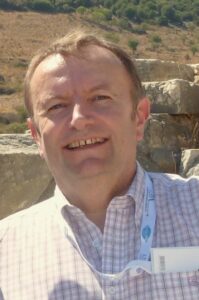
Patrick Mauchien has spent his entire career at the French Atomic Energy Commission (CEA). His early research focused on the development of time-resolved laser spectrometry for the analysis of trace uranium in solution. He subsequently worked on various trace laser analysis techniques, including thermal lens spectrometry, optogalvanic spectrometry, and atomic fluorescence spectrometry in different atomic sources such as laser-induced plasma, ICP plasma, or graphite furnace. He became head of the Analytical Laser Spectroscopy Group in 1987 and developed his expertise in LIBS. In 1993, he led a major European project for the development of microLIBS in different materials. Since 2001, he has been Deputy Head of the Physical Chemistry Department and participated as a LIBS expert in the development of NASA’s ChemCam instrument. He was a member of the scientific committee of the LIBS conferences and organized and chaired the EMSLIBS conference in 2007 in Paris. He retired in 2014.